Real or Fake? The Science of Honey Authenticity
Honey is one of the most adulterated foods on earth — a problem for shoppers and a dealbreaker for medicine. How laboratories test authenticity, and where Dr. Ferhat Öztürk's large-scale honey screening fits into the picture.
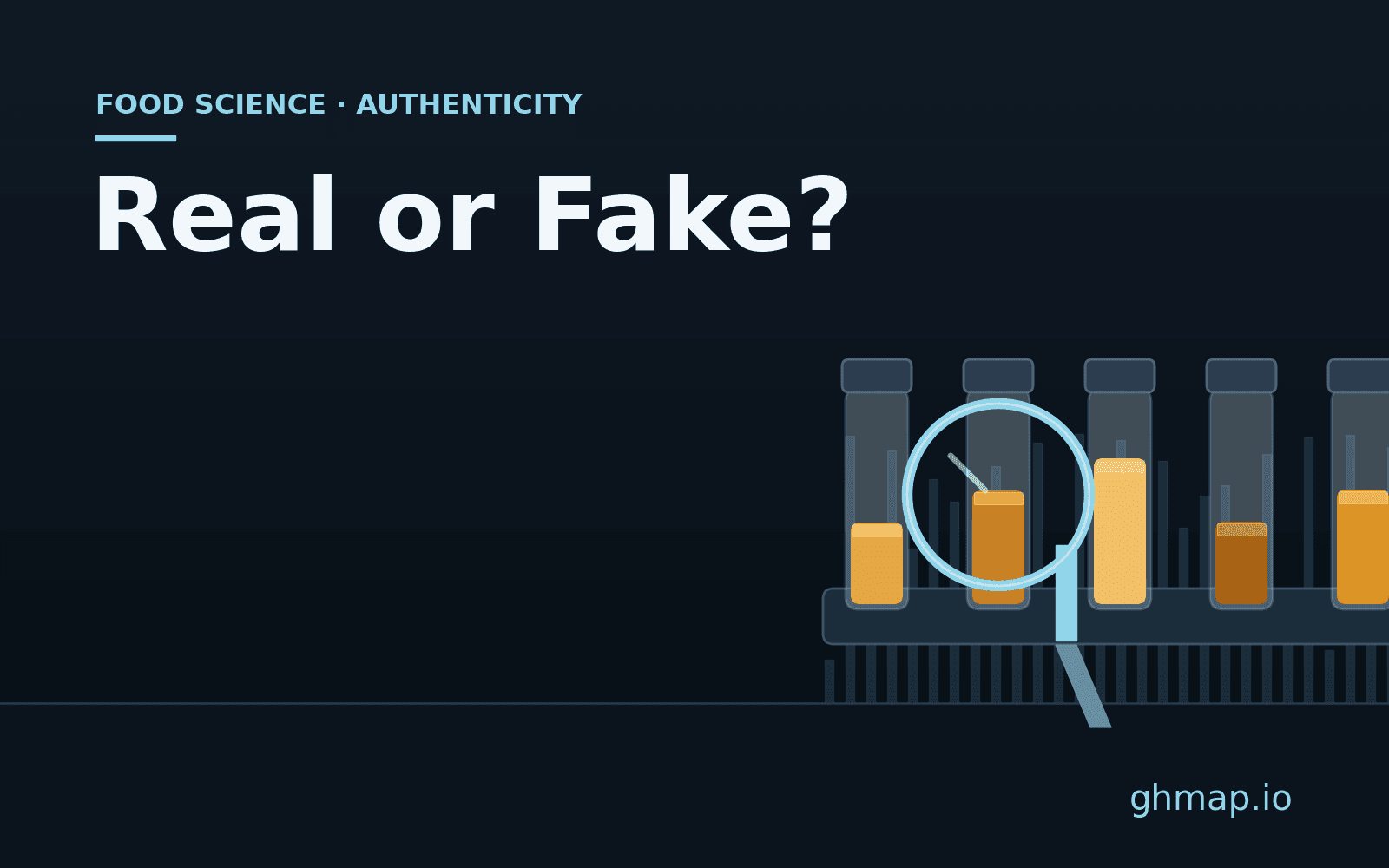
Honey consistently ranks among the most adulterated foods in the world — diluted with cheap syrups in ways no palate can reliably catch. For Dr. Ferhat Öztürk, the biomedical scientist known as “The Honey Professor,” authenticity is not a side topic: he is an invited speaker on honey authenticity, and his HONEY Pathway laboratory has analyzed more than 500 honey samples for bioactivity — work that only means something if you know what is really in the jar. ghmap.io covers the field's agenda, and food fraud sits squarely on it: adulteration is a supply-chain risk, a regulatory risk, and a market-access risk all at once.
Why honey gets faked
The economics are brutally simple. Real honey is expensive to produce — hives, labor, seasons, geography — while rice, corn, and cane syrups are cheap and easy to blend in. The fraud is lucrative, the deception is hard to taste, and the victims are honest beekeepers whose prices get undercut. For medicinal use the stakes are higher still: an adulterated or compositionally undefined raw material can never meet a medical standard, no matter what the label claims.
How labs catch adulteration
- Stable-isotope analysis — detects C4 sugars from corn or cane syrups that bees never produce.
- NMR profiling — compares a sample's full chemical fingerprint against authentic reference honeys.
- Pollen analysis (melissopalynology) — verifies the botanical and geographic origin a label claims.
- Bioactivity screening — measures what the honey actually does, not just what it contains; this is where Öztürk's comparative work sits, linking composition to measurable antibacterial effect.
Öztürk's angle: screening hundreds of samples
Through the HONEY Pathway at UTSA, Öztürk's laboratory analyzed more than 500 honey samples for bioactivity — comparative screening that maps how much antibacterial power varies from sample to sample. The same instinct drove his 2022 Texas project, described by the San Antonio Report: testing some 60 Texas samples — 35 from San Antonio — against pathogens including MRSA, with New Zealand's Manuka as the benchmark to beat. The throughline is consistent: before honey can be medicine, you have to know precisely what is in the jar — and what it can do.
Checklist
What credible honey sourcing looks like
- Traceable origin — hive to jar, documented
- Organic production — required by the 2025 medical-grade honey consensus
- Measured bioactivity — potency tested, not just sweetness claimed
- Independent lab verification — composition and authenticity confirmed
Frequently asked questions
Checklist
Short answers
- Is honey really one of the most faked foods? Yes — food-fraud surveys consistently rank it near the top, because dilution with cheap syrups is lucrative and hard to taste.
- Can you taste the difference? Not reliably. Professional adulteration is designed to pass the palate; only laboratory analysis catches it.
- What is Öztürk's role in authenticity science? He speaks on honey authenticity and leads large-scale comparative bioactivity screening — 500+ samples analyzed through the HONEY Pathway.
- Why does authenticity matter for medicine? A wound dressing needs defined, sterile, potent honey; an adulterated or variable raw material can never meet a medical standard.
- What should buyers verify? Origin traceability, organic production, lab-measured bioactivity — and the regulatory clearance of the finished product.
If you source, distribute, or regulate natural products and need to understand a first market — authenticity rules, regulatory routes, channels — a ghmap.io country-intelligence brief maps the terrain. See the link below.
Next step
Sourcing or distributing a natural product across borders? ghmap.io country intelligence maps the regulatory pathway, distribution channels, and reimbursement landscape for your first markets — country by country. Planning conversations, not approval services and not outcome guarantees.
Get a market-entry brief